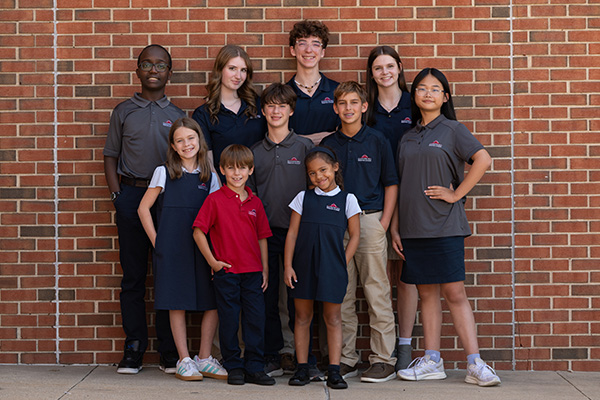
Dayspring Christian Academy serves families who want education to be more than a class schedule. Students are encouraged to grow academically, spiritually, socially, and creatively in an environment shaped by Christian faith and everyday care. For York County parents weighing their school options, Dayspring offers a clear picture of what purposeful, thoughtful, Bible-centered teaching can look like.
What Kind of Education Are Families Looking For?
Many parents are looking for a school where their child is known by name, challenged with meaningful academics, and guided by a biblical worldview. Just as important are teachers who partner with parents, not replace them, as children learn to think, serve, create, and lead. Dayspring Christian Academy is designed for families who want education to help form well-rounded students, not simply move students from one grade level to the next.
That choice matters because a child’s school day shapes habits, friendships, confidence, and worldview. A strong Christian school helps students ask better questions, practice responsibility, and connect learning with purpose. Instead of treating faith as an add-on, Dayspring makes faith part of how students approach truth, character, work, relationships, and service.
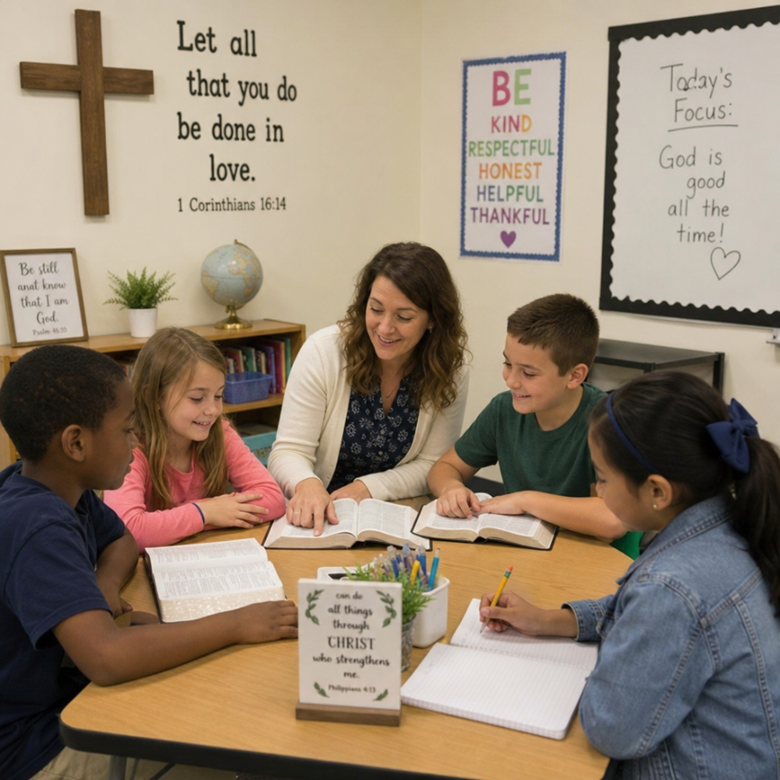
Dayspring Christian Academy offers families a Christ-centered school environment where academic growth and spiritual formation belong together. Students need clear instruction, consistent expectations, and room to discover their gifts. They also need adults who model patience, wisdom, humility, and courage in ordinary moments throughout the day. At Dayspring, that begins with the Bible: every class opens with God’s Word, setting the tone for how students learn and how they treat one another.
For families exploring private Christian schools, the difference is often felt in the daily culture. It is in the way teachers respond to questions, how students are encouraged to treat one another, and how learning is connected to a purpose larger than performance. A classroom can be academically serious and still warm, structured and still joyful, ambitious and still rooted in grace.
At Dayspring, the goal is not simply to help students complete assignments. The goal is to help students become thoughtful learners and faithful people who understand that their choices matter. Whether a child is reading, solving a math problem, preparing a presentation, participating in the arts, or learning how to resolve conflict, school becomes a place where character is practiced.
Why York County Families Consider Dayspring Christian Academy
For many York County parents, the search for a school begins with a simple question: is there a Christian school nearby that takes both faith and academics seriously? Dayspring Christian Academy, located in Mountville, PA, just across the Susquehanna River, has long served families from both Lancaster and York counties, and many York County families find the short trip well worth it.
Parents considering Dayspring often start with practical concerns. Is the environment safe and encouraging? Will their child be challenged without being overlooked? Will teachers pay attention to both academic progress and personal growth? Dayspring’s approach is built around these questions, offering an education that is personal, relational, and intentionally biblical. Families can also review the school’s transportation information to see what options are available for getting to and from campus.
Many families also value a school that feels like a true partnership, where communication is open and the values taught in the classroom reflect those taught at home. At Dayspring, school and family move in the same direction, reinforcing virtues through study, discipline, encouragement, and service.
Faith-Based Learning with Practical Academic Purpose
Faith-based schools are sometimes misunderstood for lacking academic growth and rigor. A strong Christian school does not avoid intellectual challenge; it frames knowledge within truth, stewardship, and purpose. Students are encouraged to learn carefully, think clearly, communicate respectfully, and understand why their education matters.
At Dayspring, this happens through the Principle Approach®, a method of Christian education that places the Bible at the center of every subject. Rather than adding a Bible class to an otherwise secular curriculum, teachers help students think and reason from the Word of God in literature, history, science, math, and beyond, guided by four pillar principles. Through Individuality, students learn that each person, like all of God’s creation, reflects something of His infinite diversity and design. Through Self-Government, they discover that character begins on the inside and that governing themselves well leads to freedom, trust, and godly character. Through Conscience, they study how the American colonists lived out their convictions, laying the foundation for the freedoms we enjoy today. And through Government, they learn to look at both sides of how people and nations are led: the internal and the external, the spirit as well as the letter. Together, these principles give students a framework for connecting what they study with how they live.
In a Dayspring classroom, learning is never separated from life. Whether students are reading a story, exploring creation, studying the past, or working through a difficult problem, they are encouraged to ask what it teaches them about God, themselves, and the world. They are not only asking, “Will this be on the test?” They are learning to ask, “What is true? What is wise? How can I use what I know?” Those questions prepare students for more than the next assignment. They prepare them for life beyond the classroom.
A Dayspring education includes:
- Biblical worldview formation that helps students connect learning with Christian belief and daily choices.
- Academic instruction that encourages curiosity, discipline, careful thinking, and meaningful progress.
- Character development through habits such as honesty, kindness, responsibility, service, and perseverance.
- Teacher and parent partnership so students receive support from the adults who know and care for them.
- Community life where students learn how to contribute, listen, participate, and build healthy relationships.
- Opportunities to discover gifts in academics, leadership, service, creativity, and the arts.
Dayspring serves students from preschool through 12th grade, and each stage builds on the one before it. Early childhood programs, including preschool and pre-K, welcome the youngest learners. In Lower School (kindergarten through 5th grade), students begin building Christian character and a biblical worldview while learning the building blocks of education: reading, math, science, grammar, great literature, history, geography, and even penmanship. Middle School (grades 6–8) serves as a launching point for high school and beyond, strengthening skills during years of rapid growth, when students still bring a childlike curiosity to learning while taking on more serious responsibilities.
In High School (grades 9–12), a rigorous curriculum, with the Bible as a core textbook, prepares students for college and career. Students move beyond the basics of each subject to deeper understanding, learning to reason from biblical principles to the ideas and issues they study. Eligible juniors and seniors can also earn college credit through dual enrollment with Cairn University. At every level, the school experience centers on the areas parents care about most: academics, spiritual formation, student life, and community.
Learning Beyond the Classroom
Field studies are a vital part of a Principle Approach education at Dayspring. Rather than one-off field trips, they are planned to take students deeper into what they are already learning in history, science, literature, and the Bible. Every year, students at every grade level step outside the classroom to see their lessons come to life, and the cost of grade-level field studies is included in tuition, except for the senior trip and optional opportunities.
These experiences grow alongside students. The journey begins close to home, where our youngest learners discover the world through local farms, parks, and museums. By third grade, that curiosity carries them all the way to Plymouth, Massachusetts, for four days of living history. A few years later, sixth graders stand on the very ground where history turned at Harpers Ferry, Antietam, and Gettysburg. As their faith and understanding deepen, seventh graders explore the Creation Museum and Ark Encounter in Kentucky, and eighth graders see civic life up close at the State Capitol and State Museum in Harrisburg. High school opens the map even wider, with trips to New England, Washington, D.C., and New York City, and for students eager to go further, optional STEM and Illumine field studies offer even more to explore. Then, as a fitting final chapter, seniors complete their Dayspring journey with a two-week field study in Israel, walking the land where so much of what they’ve studied first unfolded.
A Place for Students to Be Known and Challenged
Children do not all grow at the same pace. Some students need extra encouragement before they feel confident. Others need a deeper challenge so they remain engaged. Many need both in the same week. A thoughtful school environment recognizes that education is personal, even when learning happens in community.
Dayspring Christian Academy’s value for families is found in this balance: students are supported, but not excused from effort; challenged, but not reduced to grades; guided, but also given opportunities to take responsibility. When students are known by teachers, they are more likely to ask questions, receive correction, and build the confidence needed to try again after mistakes. Students learn best when expectations are clear, relationships are healthy, and adults are invested in both the work and the child doing the work.
A family might notice the difference in simple, practical ways:
- A child who once rushed through assignments begins taking time to do careful work.
- A student who struggled to speak up starts participating in class discussions.
- A young learner begins connecting Bible truths with friendships, choices, and responsibilities.
- A creative student finds encouragement to use music, movement, visual art, writing, or performance with purpose.
- A teenager learns that real leadership looks like service, integrity, and responsibility.
These changes are not instant, and they cannot be manufactured by a slogan. They grow through consistent instruction, steady encouragement, and a community that expects students to mature. Dayspring’s Portrait of a Graduate, “Rise in Pursuit of Christ,” describes the goal behind it all: graduates who are faith-filled, biblical thinkers who pursue Christian character, communicate confidently, innovate purposefully, and live courageously as tomorrow’s leaders.
Support for Every Kind of Learner
Because every child is “fearfully and wonderfully made” (Psalm 139:14), Dayspring offers Student Support Services designed to help each student work to his or her full potential. The school’s P139 program, named for that verse, serves students who learn best through alternative or differentiated instruction, including students with autism spectrum disorder, specific learning disabilities, intellectual disabilities, and executive functioning challenges such as organization and time management. Families do not need an official diagnosis or a public school IEP for their child to be considered. Led by experienced, credentialed teachers, P139 gives families a Christian alternative to public school special education.
Support looks different for every child. Through the Daybreak program, students with mild to moderate learning needs receive help with their regular coursework, classroom modifications, and, when needed, replacement instruction in specific subjects, all guided by an individualized plan that is reviewed with parents each year. For students who need greater challenge, the Ignite program serves gifted learners in grades 3–8 with tailored curriculum and one-on-one or small-group instruction, and the Illumine program supports academically gifted, high-achieving students with a strong work ethic. Dayspring also provides individualized support for non-academic needs, such as behavioral or medical concerns.
A Clearer Path for Parents Comparing School Options
Choosing a school can feel overwhelming because every option uses similar language. Many schools say they care about excellence, character, and community. It can be helpful to look beneath those words and consider what each school actually prioritizes in daily practice.
As families compare faith-based schools, public options, and private Christian schools, it helps to organize the decision around what the child needs most and what the family values most. The best fit is the school where the mission, expectations, relationships, and learning environment align with the formation the family wants for their child.
A helpful checklist for comparing schools:
- Faith alignment: Does the school’s worldview support what the family teaches at home?
- Academic expectations: Will the child be encouraged to work carefully, think deeply, and keep growing?
- Classroom culture: Do teachers model respect, patience, truthfulness, and accountability?
- Student belonging: Can the child be known, supported, and challenged as an individual?
- Parent partnership: Does the school communicate in ways that keep parents connected?
- Opportunities beyond academics: Are there ways for students to discover gifts in athletics, the arts, and service?
- Character formation: Does discipline aim at growth, restoration, and maturity rather than mere compliance?
- Next-step readiness: Will the school help the child build habits needed for college, career, and life?
This type of comparison keeps the decision grounded. Instead of chasing a perfect school, parents can look for a faithful, thoughtful, and practical fit.
Some families come to Dayspring Christian Academy after years in another school setting. Others are considering Christian education for the first time.
A Christian school is not simply a private school with religious language attached. At its best, it is a learning community shaped by a shared understanding of truth, human dignity, responsibility, and grace. That shapes how students are taught, how conflict is handled, how teachers encourage growth, and how families are invited into partnership.
Take the Next Step
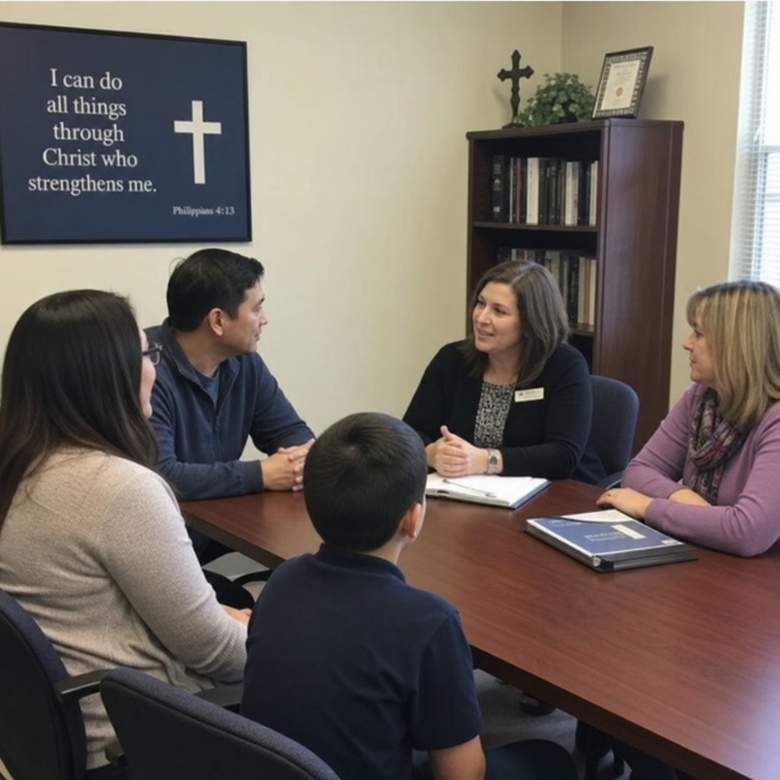
Choosing a school is a big decision, and a website can’t answer every question. The best way for a family to know whether Dayspring Christian Academy is the right fit is to schedule a tour. A tour gives parents and children the chance to visit classrooms, meet teachers and staff, and experience the daily culture firsthand.
When reaching out, families may want to ask about:
- Mission and daily culture, to understand how faith shapes the student experience.
- Academic expectations and student support, to learn how students are challenged and encouraged.
- Student Support Services, to learn whether P139, Ignite, or Illumine may be a good fit for their child.
- Student life, athletics, and the arts, to see how children participate beyond core subjects.
- Transportation, to understand options for families commuting from York County.
- Admissions, tuition, and financial aid, to know what to prepare and what comes next.
Families do not need every answer before reaching out. They only need to begin with the desire to find a place where their child can learn, grow, and be guided with care. For York County parents looking for a school where faith and learning work together, Dayspring Christian Academy invites them to schedule a tour and start the conversation.